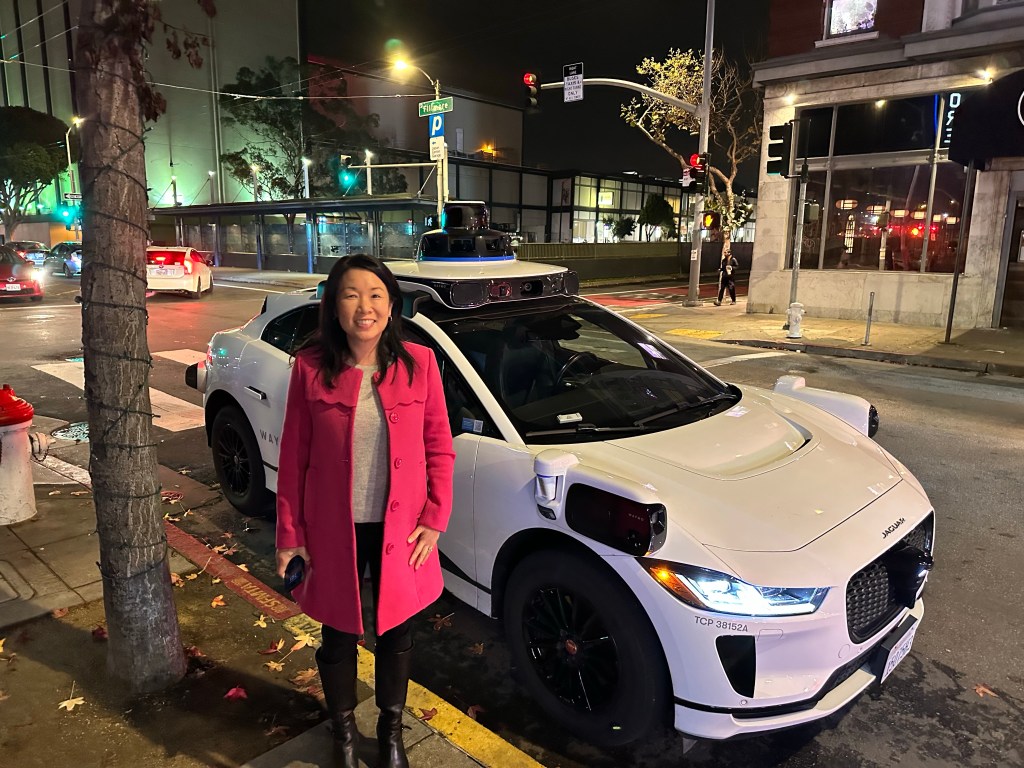
I spent a fun-filled 24 hours in San Francisco celebrating my daughter’s 18th birthday with a group of her friends. My wife and I were able to turn it into a relaxing staycation as the kids preferred to explore the city on their own (if you can imagine that). We were able to snag a highly-coveted reservation at legendary Michelin-starred restaurant State Bird Provisions. I recently was invited to join Waymo and we finally had a chance to try it for the first time.
One of my initial thoughts when booking our car was that it might take a long time to secure our ride. I imagined that there were probably not many Waymos on the street, unlike Uber or Lyft. I was completely wrong as our rides in both directions arrived within 5 minutes of being called, and a car was booked within 10 seconds of requesting it. No waiting forever to find a driver, and no cancellations for better fares. So far I was happy.
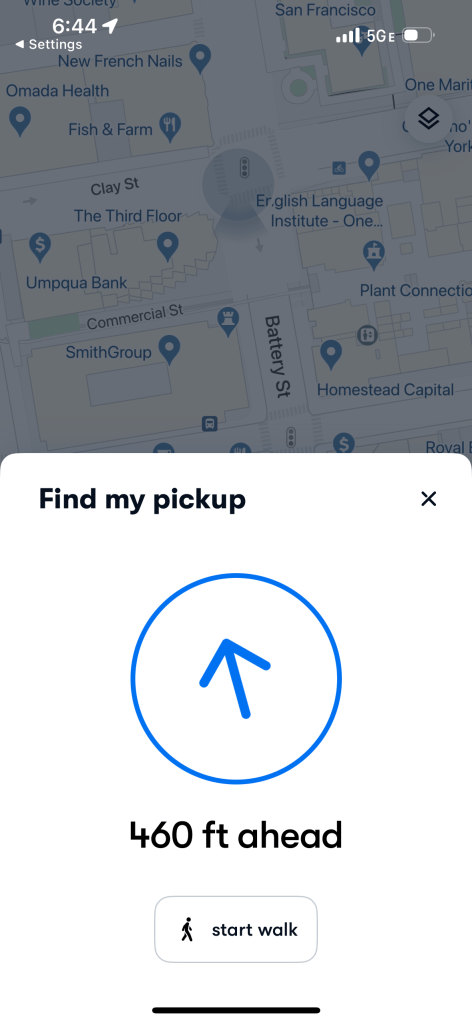
One thing that was not ideal is that we had to take a short walk to our pickup spot (1-3 blocks) for both rides. There are clearly safer spots for Waymos to pull over and pick you up, so they choose the closest place that will allow for an easy entry. This was not a big deal on a beautiful evening but I can see it being a minor inconvenience on a night when it is luring rain. They also provide you with directions and a compass-like arrow telling you exactly where to go.
When the car arrives the handles are flush with the body of the car, so there is no way to open the door until you tap the “Open Door” button on your app. The handles pop out of the sides and you can then open the door. they disappear again and lock once you are inside for safety.
As it was my first ride, a recorded voice told us that we still need to buckle our seat belts, and that Waymo team members could check on us via camera from time to time, but could not hear anything we say. So making out is not a great idea but you can fart as much as you want and nobody will know.
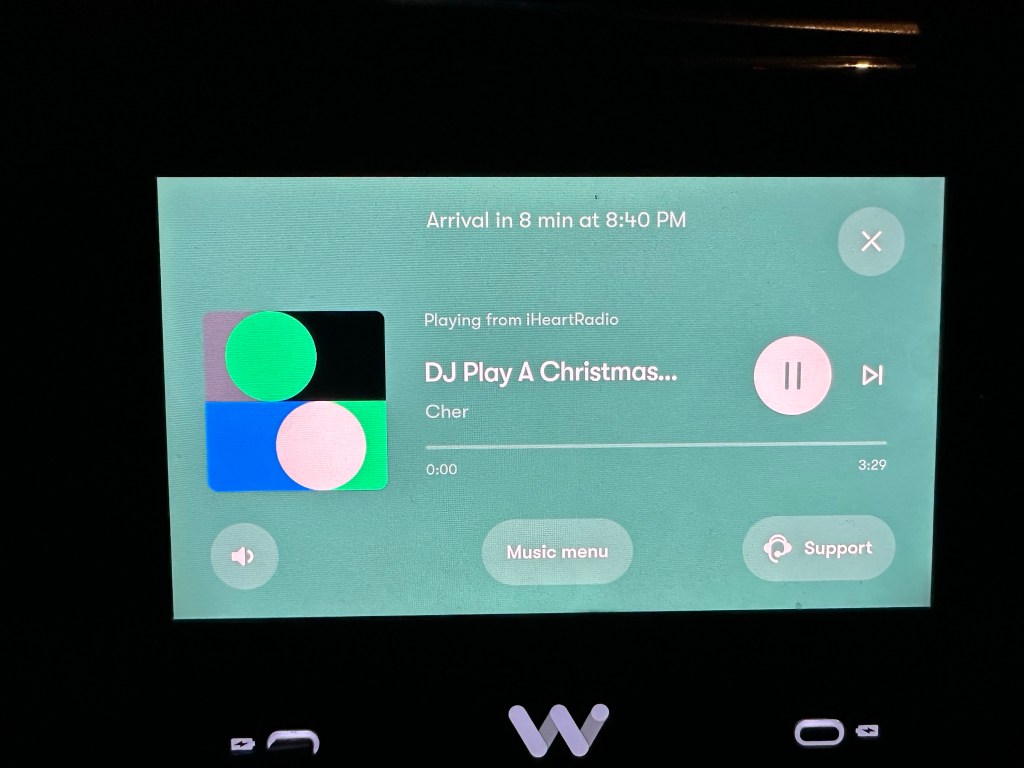
There is a panel in front of you where you can choose the music you would like to listen to, so we chose Hanukkah songs
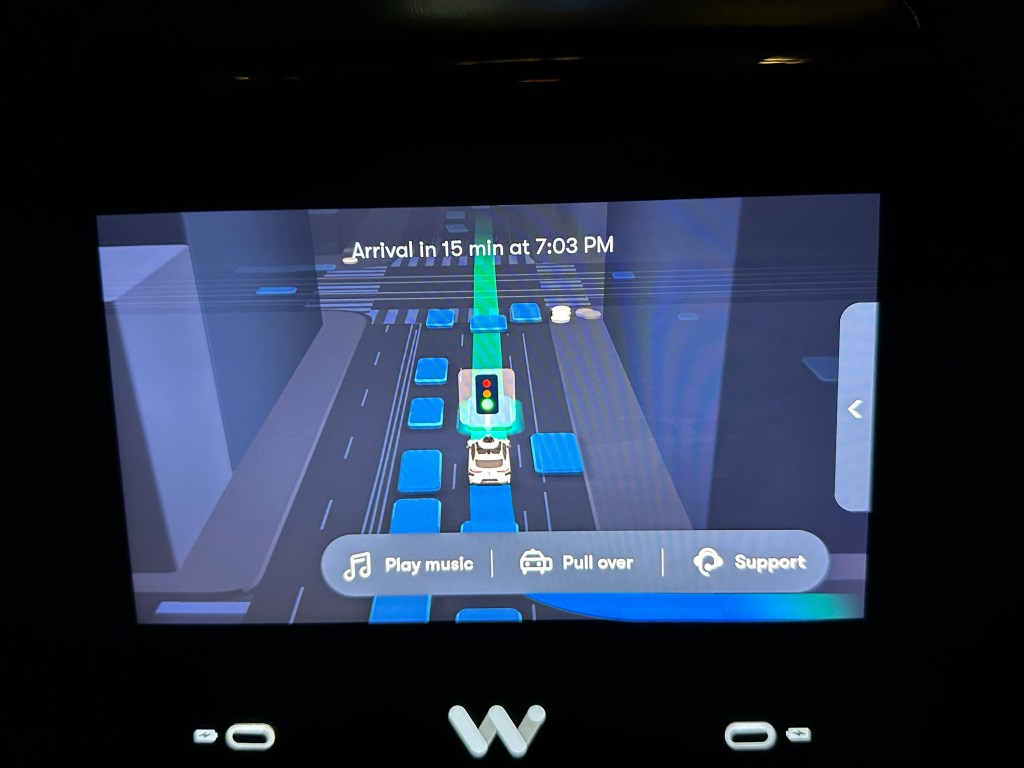
For the majority of the ride you could watch your car’s progress and see what it detected around it. The blue rectangles are any cars that were driving or parked around us. White dots were people it detected on the sidewalks or crosswalks.
Once we arrived the doors unlocked and we got out. It was a little odd having nobody in the driver’s seat, and my wife actually said “thank you” as we were exiting the car out of habit.
Ultimately, I would take Waymo whenever I am in San Francisco if it were the same price or cheaper than Uber or Lyft. My two rides to and from dinner were about 1 dollar more than Uber but I was happy that I have it a try. I can see prices coming down as technology and scale come into play, but for now the jaguars that drive you around town must be astronomically expensive to manufacture. It is going to take many years (or decades) to perfect this technology and see it everywhere, but it will definitely revolutionize transportation. Highly recommend getting on the list for an invite and trying it sometime.
Japan is one of the hottest destinations on the planet right now (2023). It has finally reopened completely after having some of the strictest Covid-related entry restrictions in the world. In addition to all of the incredible history, culture, art, design, and food that has always made Japan an attractive destination, the Japanese yen is at its lowest level in over 30 years. After years watching the European airlines introduce budget fares and entire low-cost airlines, budget airlines with direct flights to Japan are starting to roll out service to Tokyo and Osaka. Business hotels are far less busy than in the booming 80s and 90s and now provide countless options for very cheap, clean lodging in the center of every major metro area (and most mid-size markets as well). For my money (and if you plan correctly), this is the cheapest developed country in the world,
Japan also has some of the most welcoming people anywhere you will ever visit. You will be amazed at the graceful attitude and genuine kindness that Japanese people show toward others
At the same time, Japan is a country experiencing massive change. The population is declining rapidly and increasingly more foreign workers are being brought in to take on jobs that would otherwise remain unfilled. As more and more Japanese celebrities, politicians, and athletes come from households where one or more parents are not of Japanese descent (the newly crowned Ms Japan was born in Ukraine), deep discussions are taking place over what it means to be Japanese. After cultivating its unique and special culture over the course of hundreds of years while being closed off to the world, this can be a difficult conversation to undertake
Most people visiting Japan for 8-10 days go the Tokyo/Kansai route, with around 4 days in Tokyo, and 4 days in Kansai area (Kyoto, Nara, Osaka, etc.) I think that is probably the best approach for 8 days, but if you have 10 or more I would try to add a day or two in Himeji, Hiroshima, and Miyajima. They are pretty easy to get to from the Kansai area. All 3 would be impossible in one day but if you are able to spend one night in Hiroshima all three are very doable. Also, these tips don’t include attractions for specific/unique hobbies or interests but there are plenty of those (anime museums and studios, cat cafes, etc.) If you have already seen the main attractions in Japan please let me know and I can send you a lot more ideas for Northern or Southern Japan. Here is what I normally do when we visit:
“I never get bored and I always learn new things in Manhattan. But there’s 15, 20 different Manhattans in Tokyo to me”
– Anthony Bourdain
Tokyo
Day 1 –Tsukiji Fish Market’s old location has closed, but they built a new facility called Toyosu Fish Market a short subway ride or walk away. I haven’t been there yet but the old Tsukiji Fish Market still has all of the shops and stalls that were there before. It is still really fun to go. there. It used to be that if you were arriving in Tokyo you would be up early on the first morning, so it was a great opportunity to see the chaos of Tsukiji and grab some early morning sushi at one of the 24-hour places.
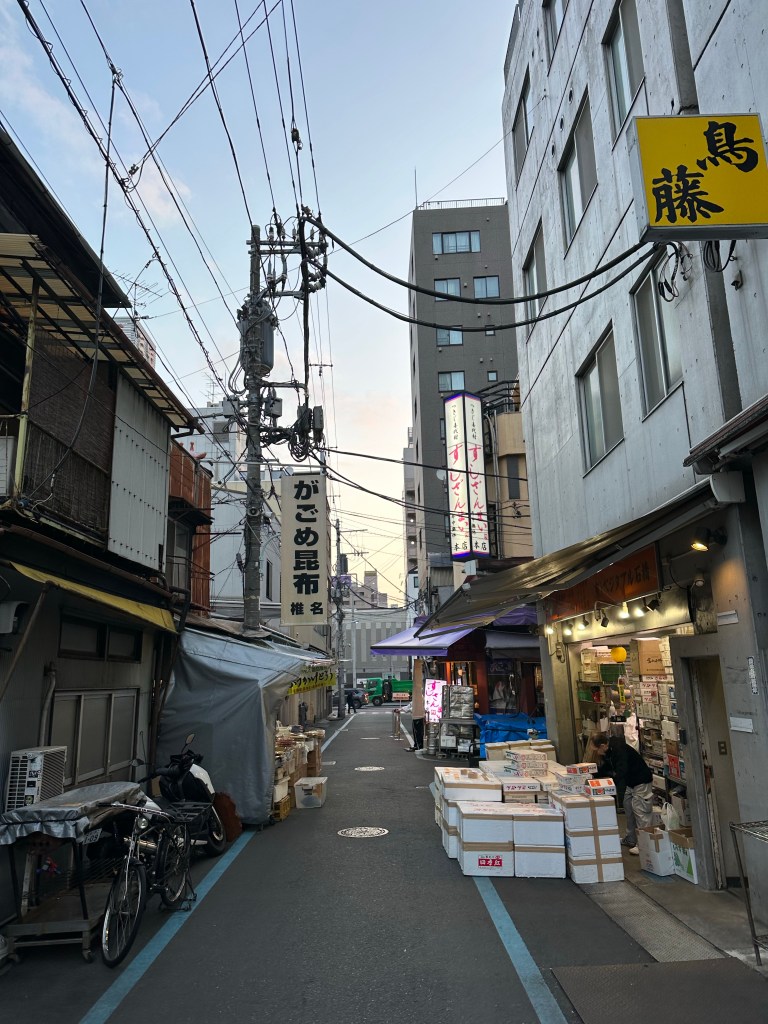
Shops just starting to open up at sunrise in Tsukiji
When we were in college in Tokyo we would saunter around and watch the hustle and bustle, and take in the tuna auction where Japanese wholesalers would bid on frozen whole tunas brought in from all over the world. Unfortunately, it is much more difficult to witness this now. The auction is closed off and there is a very small chance that you might get a limited view of it. I’ve never done this but it doesn’t sound like it is worth waking up early. That said, until I can see it for myself, I would check out this comprehensive guide from Tokyo Cheapo, which has a lot of good content about Tokyo beyond just this Toyosu description: https://tokyocheapo.com/entertainment/sightseeing/toyosu-fish-market-what-to-know/know/. There is plenty to see just walking around the Tsukiji market area once it gets going so if you are up early, you might check out Toyosu first, then visit Tsukiji around 8 or 9 AM to check out the shops.
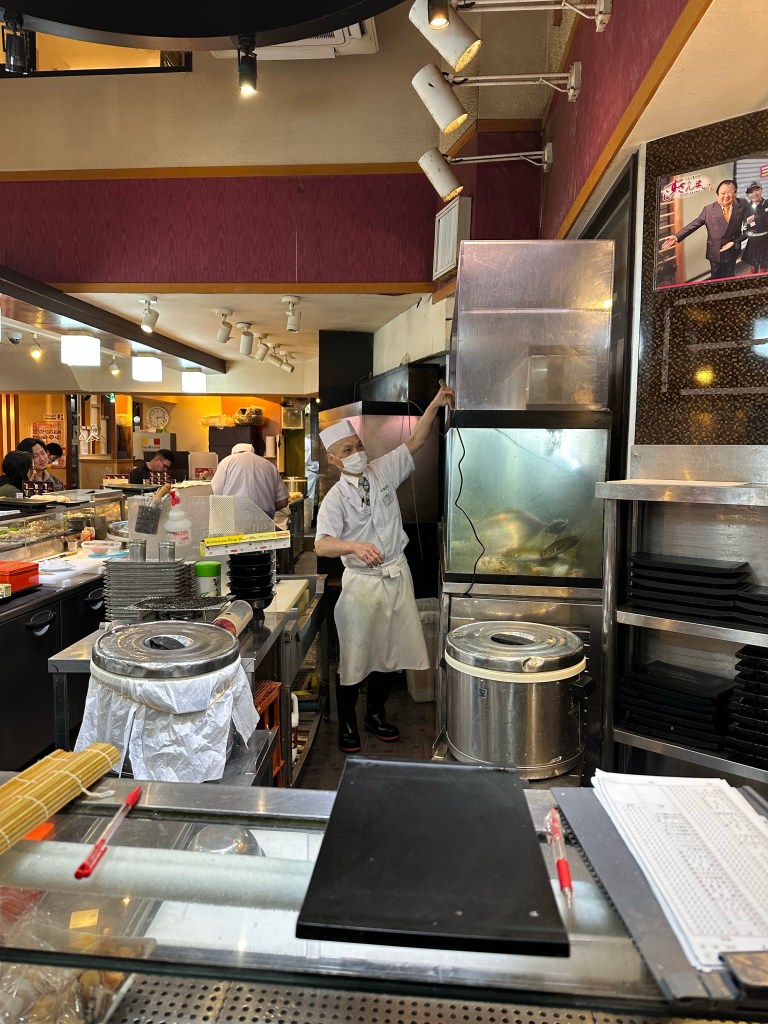
7 AM at a 24-hour sushi place. The master is fishing a Spanish mackerel out that he will serve as sashimi – freshly cut
There are still a few 24 hour sushi places in Tsukiji if you want to have a sushi breakfast (or mid-morning snack?). You can spend a lot of time checking out the stalls that sell anything and everything that comes out of the ocean. There are Japanese knife vendors, lots of street food, and plenty of places that specialize in specific fish, seafood, produce, etc. Normally eating on the street or train, etc. is considered really inappropriate but I think it is fine here.
From Tsukiji, we usually like to walk to Ginza. Ginza is a great for shopping and nightlife but since you are so close you probably can just check it out after Tsukiji and/or Toyosu. You can always come back at night to have dinner here. If you are looking at a map, you will walk down the main road from Tsukiji to Ginza and pass by the big Kabuki Theater on the way. Ginza is usually kind of sleepy at this time of day but places should be open by 10 AM if it is a weekday. One thing that is kind of hard to explain but kind of a fun experience is entering a department store right when they open. There is a Mitsukoshi department store on the main intersection of Ginza that opens at 10:30 AM. When it opens the entire staff line the aisles and bow deeply to the first customers and say good morning to them. It is kind of cool (especially for kids) to walk down the aisle and have the entire staff lined up on both sides to greet you like royalty as you walk through. Other than that you can walk around and look at some of Ginza’s shops (My wife loves the Ito-ya paper store – 7 or 8 stories of cool paper and Japanese-style school and art supplies). Not a lot will be going on this early so you might consider coming back at night on another day.
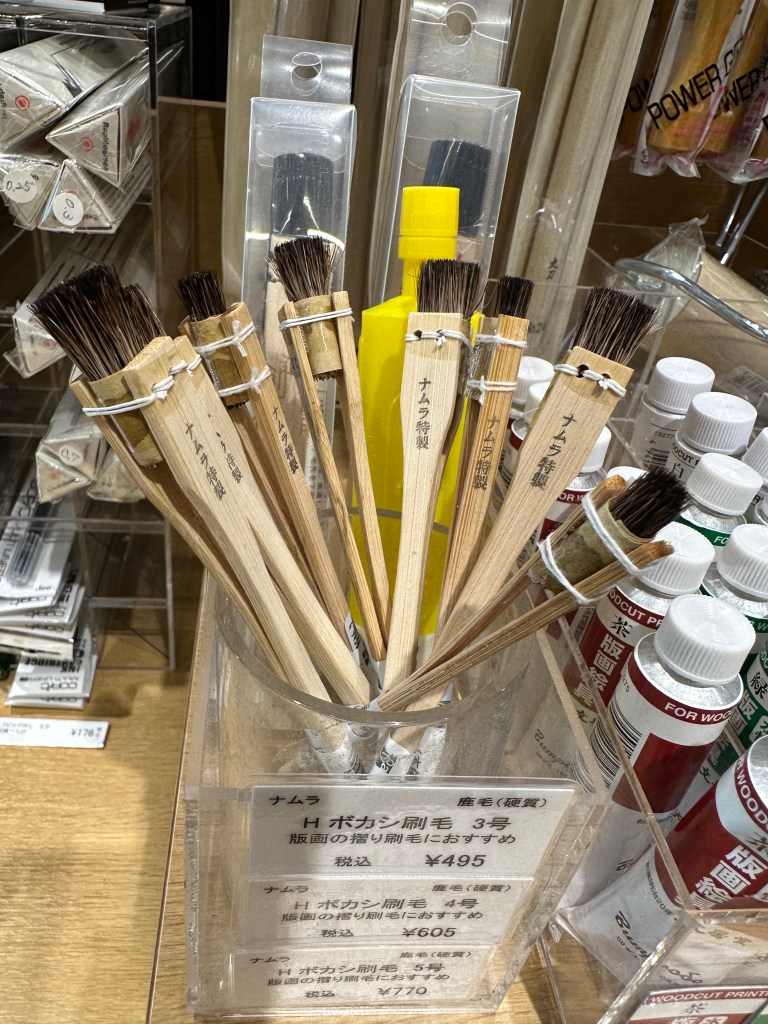
Mini paint brushes for sale at Ito-Ya
It will probably not even be lunchtime by the time you are finished at Ginza, so you can head to Akihabara (electronics district) or Asakusa Temple (probably the best temple in Tokyo). I would head to Asakusa since Akihabara is a little bit closer and more accessible if you need to save it for another day. Rather than go to the station right in front of Sensoji Temple in Asakusa, we usually go to Tawaramachi Station and then walk to Asakusa. The reason is that there is a street right by Tawaramachi called Kappa Bashi that is lined with restaurant supply stores. If you are into that kind of thing they have all sorts of Japanese-style dishes, cups, cookware, and specialty Japanese knife stores that you can check out.
Checking out all of the wax meat, fish, and produce
From there it is maybe a 10-15 minute walk to the temple. The area around Sensoji Temple and Kaminarimon has a ton of shops and interesting things to see so make sure to spend plenty of time checking out the neighborhood. There is a more conveniently located subway station near the temple that you can use to get back to your hotel or apartment. That should be a pretty good first day and you will be tired at night so maybe find someplace to eat near your lodging (but I also have some food recommendations below).
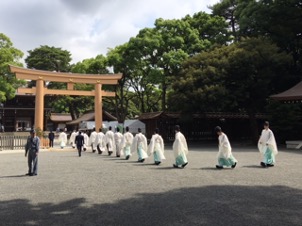
Day 2 – We usually spend Day 2 on the west side of Tokyo. This involves a lot of walking but I think that is the best way to see the city. We usually go to Harajuku station (if you are using JR) or Meiji-Jingu Mae Station if you are taking the subway to visit Meiji Shrine (I cover this a little bit below, but you can buy a cheap subway pass at the airport when you land. It is around $5-6 per day for unlimited rides all day long if you buy a three day pass). This is my favorite attraction in Tokyo and the place where you should go if you only have 1 day in the city. Beautiful grounds, and they usually have a Shinto wedding ceremony taking place several times throughout the day.
From there you can head back to Harajuku Station (very close) and walk down Takeshita-Dori – the main pedestrian shopping street (right across from the Harajuku Train Station leading away from it).
Lots of clothing stores and 100 Yen shops (these are awesome for the kids to walk around and pick up cool Japanese trinkets for 100 Yen each. We would let our kids go out on their own each night with 1000 Yen. They inevitably went to a 100 yen store and came back with all sorts of stuff). The area may not be very exciting if you go too early or late at night, so you might want to find a place to have a snack or a drink if the Main Street (Takeshita Dori) doesn’t look too busy yet.
From Harajuku it is a tough call. It is easy to go to Shibuya (10 minute walk down the hill) or Shinjuku (2 JR stops away) and walk around and maybe have lunch, but both of those places are totally different experiences at night. The main crosswalk in Shibuya (called Shibuya Crossing by most tourists and right outside the station) is something to definitely be experienced at night. You might wait until you have been there at least 2-3 days so you are not too tired. It’s insane. It has also been taken over by Tik-Tokers and Influencers that are all trying to get some video for their posts
Sidestepping the mobs of locals and tourists that flood the intersection at every green light
Still, both areas will be busy and have plenty to see and do during the daytime. Shibuya is a place where younger people hang out to eat, drink, and shop. Shinjuku is home to the world’s busiest train station and has plenty of stores, restaurants, etc. You could also check out the big Turkish mosque west of Meiji Shrine (probably a 15-20 minute walk). Not exactly Japanese but interesting in the middle of Tokyo and it is also a Turkish Cultural Center (so the mosque has a much more Ottoman design like you would see in the former Ottoman Empire). It is always at the top of lists of things to see in Tokyo, but for me it is not as important as the more Japanese sights. I would probably do Shinjuku and try to visit the Tokyo Metropolitan Government Building. You can go to the top for a view of the whole city and it doesn’t cost anything. There are a lot of food options here too. You could also check out the National Gardens here.
If you still have time in the afternoon (and regardless of whether you just ended up in Shibuya or Shinjuku) you might want to take the train over to Akihabara to check out the electronics stores in the afternoon. This used to be a must-see when Japan had all the coolest new gadgets and technology on display. These days I don’t think it is as impressive but you still should visit to check it out. One word of warning is that a lot of the shops around there advertise with big anime drawings of scantily clad girls and generally pretty sexy artwork. Not X-Rated but not necessarily the best thing for kids to see. I don’t think it should prevent you from checking the area out but just giving you a heads up. Find one of the tall electronics stores in the area and explore each floor.
That should be a good Day 2. If you are not too tired at night this might be a good day to head to Shibuya to have something to eat. Coming out of Shibuya Station into the main crosswalk (Hachiko exit) is something to experience. One more thing is that you can flip the morning and afternoon parts of Day 2. To be honest, Harajuku is best seen later in the afternoon when school lets out and there are kids everywhere. Shibuya is similar. I just like to see Meiji Shrine in the morning but maybe you could go there, take the subway to Akihabara, have lunch, and come back to walk around Harajuku and Shibuya (I hope this is not confusing but Meiji Shrine should definitely be first, then choose Akihabara for lunch and come back to Shibuya and Harajuku in the afternoon). Meiji Shrine, Harajuku, and Shibuya are very close together but not necessarily the best to see at the same time of day.
Day 3 – I would spend Day 3 checking out the grounds of the Imperial Palace in the morning. You don’t need to spend a lot of time there as you basically walk up to the moat around the palace and check out the gate and wall. You actually don’t really see the palace at all but still a good way to spend some time. This area is also walkable to Ginza if you were not able to see it on the first day. Once you have seen this you can also check out Akihabara or Shinjuku if you haven’t already. In the afternoon you could try to see anything you have missed. Otherwise, you might check out the area around the Sumo stadium (Ryogoku). It is closer to the Akihabara/Ginza side of town. If you are there in January, May, or September there will be a tournament going on (March is in Osaka, July in Nagoya, and November in Fukuoka). If you are there on an even numbered month you might be able to attend an early morning sumo practice. This used to be easy but thanks to the internet everyone knows about this now. Not sure how hard it will be to see it. If you go and just walk around the Ryogoku neighborhood there are a few interesting shops with supplies for sumo wrestlers, and you will probably see actual wrestlers walking around the neighborhood. Not a must-visit but kind of fun if you have time.
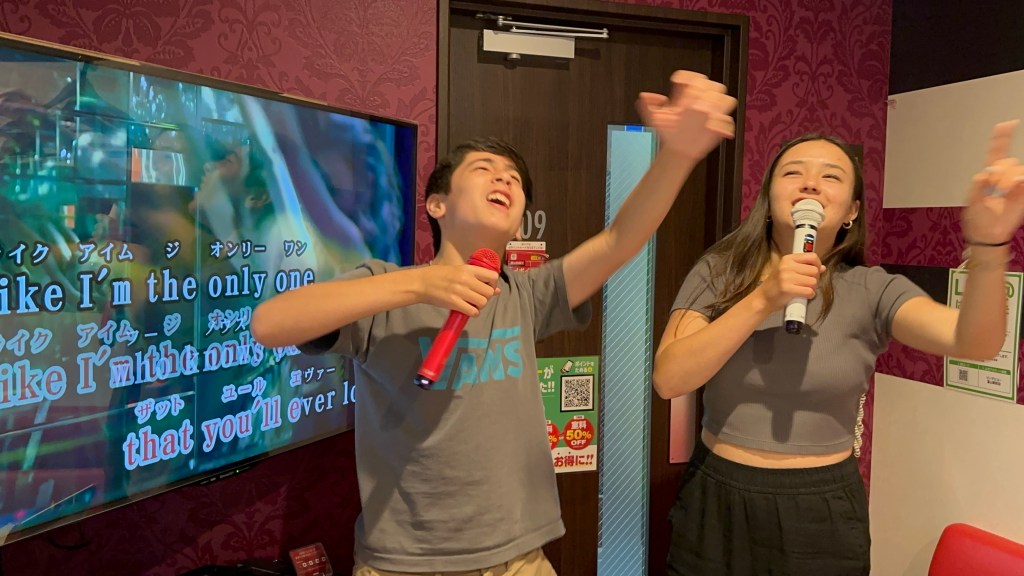
At night you might consider going to a Japanese Baseball game. Always a fun experience. You could also walk around Ginza or Shinjuku to see those neighborhoods all lit up at night. There are a few other areas known for their nightlife (Roppongi is one) but not sure if the kids would love walking around an area known for bar-hopping. The one thing that Roppongi does have that is really cool is a nice view of Tokyo Tower all lit up at night. You can see it by looking down the main street leading away from the train station. Even better, you can go to the actual Tokyo Tower and take the elevator up for a nice view (you have to pay for it (although I just took my son to an arcade there which included access to the top floor), and the Tokyo Metropolitan Government Building in Shinjuku also has a great view for free). Maybe visit Tokyo Tower, have dinner in the area, and rent a karaoke box to sing the night away.
Day 4 – You have probably seen most of the major sights by now so you could either head to the Kansai area in the morning (and stop along the way. More on that below) or take a day trip outside of Tokyo. Hakone, Nikko, and the Mt. Fuji area are all good options. You could also try to see Kamakura if you are not planning to stop there on the way to Kansai. Yokohama is also an easy day trip and has a pretty good Chinatown and Harbor, but I would do one of the others I mentioned before Yokohama. Probably Nikko or Hakone would be at the top of my list, then Mt. Fuji, then Yokohama. Again, that is if you do not plan to see Kamakura on the way down to Kansai. I have actually taken a day trip all the way to Nagoya to see the castle there so if you are visiting in July you could try to get tickets to the Nagoya Sumo tournament and make it a day trip (but it is probably easier to try to do this on the way down to the Kansai area too).
Day 5 – This might be Day 4 for you if you decide to head to the Kansai area after 3 days in Tokyo. This is the day you should activate your JR pass and head south. Keep in mind that there are only certain trains that you can ride (the 2 fastest bullet trains don’t allow JR Pass holders). You used to be able to jump on a train and just grab an unreserved seat. That caused a lot of problems with tourists who were riding the wrong trains or sitting in reserved seats. So, they now require you to reserve a train for any bullet train rides. You can go to the JR counter and make a free reservation for a seat so that you know exactly which track, car #, and train you should ride. It takes a few minutes and won’t really interfere with your schedule. If there is a long line you can purchase a seat assignment through the automated ticket vending machine. This may be confusing. There were people that helped with this process at Tokyo Station, but that was the exception. I got the hang of it and only reserved with the machine for our last trip.
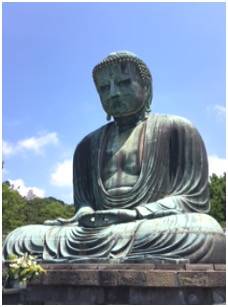
If you leave in the morning there are some interesting places to stop along the way. The last time we were there we stopped in Kamakura. This is the former capital (after being moved from Nara and Kyoto) and it has several temples, and a giant Buddha that are all worth visiting.
The bullet train does not go there but you can take a regular JR train (just have someone at the JR Office in Tokyo reserve your tickets). There is a visitor center at the exit from the train station with a lot of valuable information (and English speakers). You will have to take a bus to 1-2 of the main attractions so it’s important to know where you are going and how to get there, but they explain it very well at the tourist office and will give you a map. Bus drivers are used to dealing with lots of tourists.
The other option I mentioned above is Nagoya. You could stop off to see the castle, but I would only recommend this if you don’t plan to go to Osaka Castle during one of your days there, or Himeji Castle (the best one in Japan). Nagoya Castle is probably better than Osaka Castle but if you are already going to be touring around Osaka for a day it is nearly as good. If the sumo tournament is going on (regardless of what city it is in) you could also try to get tickets in advance (you won’t be able to get them the day of the tournament) and stop off to watch the matches. The best wrestlers go from 4-6 PM so you could probably eat dinner in Nagoya after that and then take the bullet train one hour to Kyoto to check into your hotel or Airbnb late.
So to summarize, on the way from Tokyo to Osaka, the best options for a stopover are, in my opinion, Kamakura first, and Nagoya second (mainly to see the castle).
Day 5-10ish – Like I mentioned earlier, you could probably devote an entire week to Kyoto so you will probably want to adapt your itinerary to the number of days you want to spend here. With four days in Kansai I would probably recommend 2 days in Kyoto, add 1 day in Nara, and then a day-trip to Himeji Castle (which should allow for a little time to explore Osaka on your return). If you only have 2 days I would say 1 day in Kyoto and 1 day in Nara. If you have a 5th day then I would add a day where you look around Osaka. Here is what I would see given each number of potential days:
Day 1in Kansai – The thing that makes Kyoto so tough is that it is big, and many of the coolest things to see are pretty spread out. If it is summer it will be hot and you will likely do a lot of walking so plan ahead and be ready for tons of foreign tourists to cut you off or get in your way. A lot of the best temples and shrines are on the east side of town, so pretty easy to walk or take the train/bus between them (you can get a day pass for all of the buses for 5-6 dollars. There is an information booth at Kyoto Station that can help with this). But, my favorite thing in the whole city is the Golden Pavilion, which is far on the northwest side of town. The train doesn’t go there so you basically have to take an expensive taxi or a 40-minute bus ride. If you have 2 full days then it is worth spending a day on that side of town, but with only 1 day, I hate to say that you might skip the Pavilion and focus on the major sites on the east side. There is just more that you can see in one day on that side of town. Kiyomizu temple, Heian Shrine, and Fushimi-Inari Shrine are the top things to see on the East side of town (with plenty of others in between. Just look on Trip Advisor for all of the different options.) If you want to try to cram a lot in and spend a little more money you could try to taxi around and include the old Imperial Palace or Golden Pavilion on this day as well. Those should definitely be included in a second day
Day 2/3 – If you have a second day in Kyoto then I would save the west side for this. You could start at the golden pavilion and then work your way down to Arashima Bamboo forest. We actually used a service called Flytographer (https://www.flytographer.com/) to meet a photographer near the Bamboo Forest. He took us to a very nice temple and the bamboo forest to take family photos. He also has his license to be a tour guide so we sort of got a free 2-hour tour and professional family photos that we could print ourselves for $150. We felt it was a great deal. I can give you his info if you are interested in doing this. I would actually recommend trying Flytographer if you go anywhere in the world. We only used it once but it was a great deal for us and we got some really nice family photos. That said, I believe they are much more expensive than they used to be
Day 3 – You should have seen most of the major sights in Kyoto by now so I would definitely do Nara if you only have 1 more day. The Nara JR Station is a little bit further from the first temple than the Kintetsu Nara Station, but I like the walk and there are a lot of interesting things along the way (plus it is free with your JR pass. Just make sure to take the express train so that you don’t stop at all 21 stations between Kyoto and Nara).
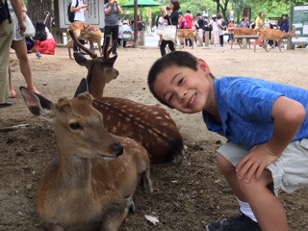
From JR Nara Station you can walk up the main drag toward Kintetsu Station. There are a couple of smaller temples to see but the highlight on the walk will be the big grassy area (Nara Park) outside Kintetsu Nara Station. There are deer everywhere that are very docile. Good for pictures and you can buy snacks to feed them from vendors on the street.
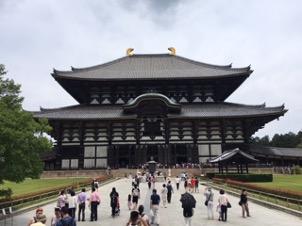
From there, the first site to see is Todai-ji Temple. For me, this is THE temple to see in Japan and a UNESCO world heritage site.
From there you can walk over to the main shrine (Kasuga Taisha Shrine. Probably a 20 minute walk). There are plenty of other things to see as you walk around the parks, but those 2 things are spread out enough for you to be able to see a good portion of Nara and decide if you want to make any detours to smaller attractions.
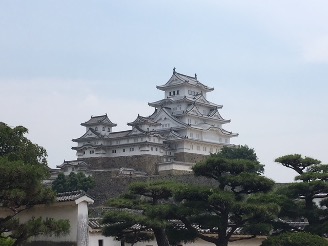
Day 3/4 – I would take a 4th day to visit Himeji Castle even though it is far. I think it is worth the day trip as it is the best castle in Japan. It is a tough call between this and spending a day in Osaka. Osaka also has a nice castle and some different shopping areas so not a bad choice since it is closer, but Himeji is really worth the extra 30 minutes or so on the bullet train. I would do Osaka if you have a 5th day in the area. If you stay in Kyoto, Himeji is a little far (still very doable) but if you stay in Osaka it should be a no-brainer day trip.
When we went last year we stayed in Osaka at a Courtyard Marriott (a super nice one) right next to Shin-Osaka Station (the bullet train station). It was centrally located and we could be in Kyoto in 15 minutes, Nara in 40 minutes, and Himeji in less than an hour. It wasn’t a very exciting neighborhood but we didn’t mind that (much more exciting Osaka Station is only 1 stop away). If you stay in Kyoto, Himeji will be further so something to consider.
Day 4/5/6 – I would spend this day in Osaka if you haven’t seen it already. If you have, or are staying in Osaka, you might consider a long day trip to Hiroshima and Miyajima Island. It is about 2 hours each way, but if you leave early you can see Miyajima Island in the morning, the peace memorial and museum in Hiroshima (where the atomic bomb was dropped) in the afternoon and take a late train home. It is a lot for one day so if I were to outline a perfect scenario it would spread this over 2 days and one night in Hiroshima so you aren’t rushed. You could easily add Himeji Castle on the way, end up in Hiroshima and see the memorials that afternoon, then visit Miyajima Island the next morning before coming back to Osaka (this is essentially what we did. Hiroshima is a beautiful city for hanging out.) Miyajima Island is a UNESCO World Heritage Site and was our favorite thing we saw on our last trip there. We loved it and your JR Pass will cover the ferry ride there.
You can fly out of Osaka or backtrack to Tokyo to return home after this. Flights are always in the evening (I think the earliest is 4 PM) so you could take the train back to Tokyo Station in the morning, then switch to the Narita Express for Narita Airport, or take a local JR train to Haneda if you fly out of there.
Osaka: I don’t want to make it sound like you shouldn’t spend any time in Osaka. It is a great city filled with a lot of cool neighborhoods and great food (considered the food capital of Japan and therefore the world). I think that if you have a day to spend here you should see Osaka Castle (unless you have seen one or two castles already), the Dotonbori shopping area (a good place for lunch), Nipponbashi (electronics district) and hang around Osaka Station in the evening and have dinner. I don’t know as much about Osaka as I have only been a few times and seen the same things each time, but there are plenty of online resources available if you want to create a multi-day itinerary beyond the places I described.
FOOD:
My favorite restaurants virtually everywhere in Japan are not reviewed anywhere, are very hard to find, and don’t have English menus (or signs in front) so it is hard to describe where they are or how to get there (and once you are there you won’t know what is on the menu). There are also a lot of places that are not on the ground floor so it is hard to know what kind of cool restaurants are on the different floors of a skyscraper just by looking at a menu posted at the entryway and written in Japanese. I will try to outline specific types of food that you should try while there and will give you a few specific places to find them or check out.
The most important thing to understand about Japan is that while, yes, they have amazing Japanese food (the sushi, ramen, tonkatsu, etc. here are the best in the world), what many people do not know is that you will also find the best food of almost any kind here. I think Japan has the best Italian, French, Chinese, Korean, baked goods, soft serve ice cream, egg salad sandwiches, fruit, Denny’s (yep), potato salad, and virtually anything else that you can think of. The entire food system here (from farms to distribution to preparation) yields products that are on a whole different level from the rest of the world. So, while I would be eating as much Japanese food as possible, you really can’t go wrong eating anything there. I usually invent reasons to have a 4th or 5th meal every day. At a minimum you should be snacking on street food or stocking up on snacks at convenience stores in between meals. Steamed buns, sandwiches, onigiri (rice balls), chips, and even sushi are all really good even at 7-11. Soft serve ice cream at McDonald’s is nothing like what you would eat here.
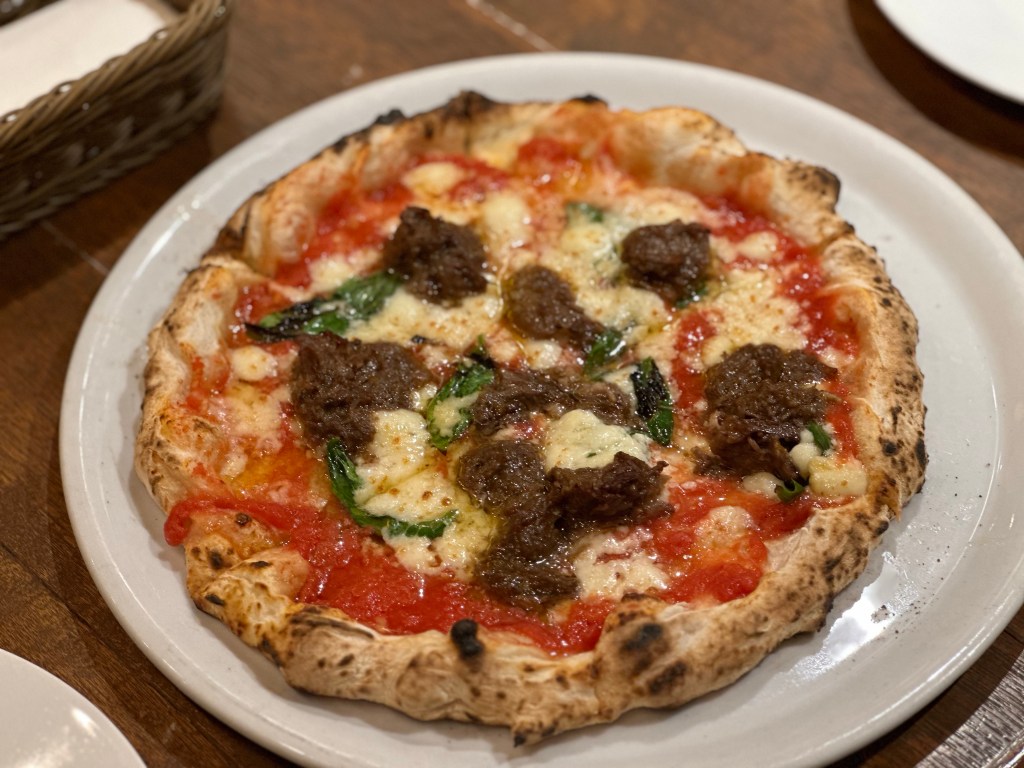
Pizza at Savoy in Azabujuban. David Chang calls this the best pizza in the world
So, here are a few things I would not miss while you are in Japan:
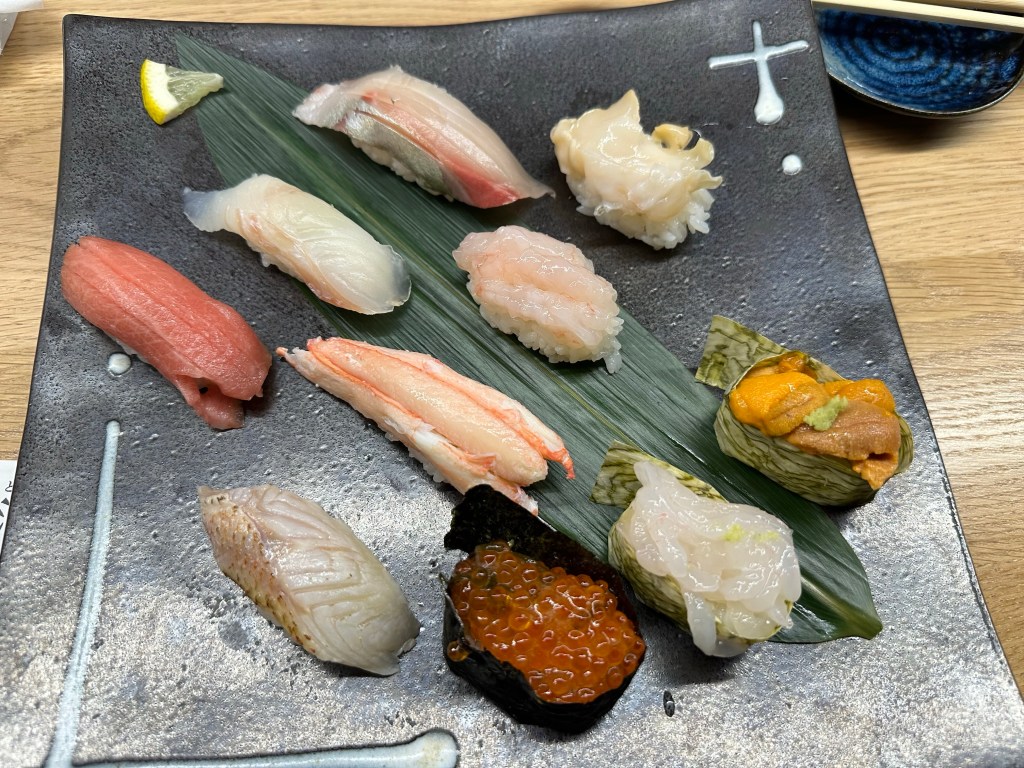
Sushi: This one is pretty obvious but if you are sushi lovers then there are lots of good options. I mentioned before that you can eat sushi at Tsukiji Fish Market. This used to be the best place for it but some of the 24 hour places are not as good as they used to be. In fact, quite a few cheap, lower quality options have popped up as the Japanese economy was gotten weaker over the years.
Sushi lunch at Kanazawa Station. This was about 20 US Dollars
I would recommend not using Tripadvisor to find restaurants (pretty much anywhere in the world) because you are reading the opinions of tourists. I think searching for food bloggers that you like or using the resources I use for Tokyo and Osaka are better bets. The Michelin Guide (you can get the app on your phone), http://bento.com/, The Eater 38 (Tokyo – https://www.eater.com/maps/best-restaurants-tokyo-japan, Osaka – https://www.eater.com/maps/best-osaka-restaurants-japan-38, none for Kyoto). And, the best site for me is called Tabelog – https://tabelog.com/en/ The English version is not very user friendly, but it covers all sorts of neighborhoods and cuisines. The Japanese are very tough graders so anything above 4 stars with a lot of reviews is probably very good. Even 3.5-4 stars should be a really good meal. If you (or anyone you know) reads Japanese the app is super helpful.
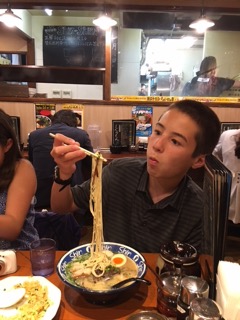
Ramen: We probably ate ramen 15-20 times last summer everywhere from Fukuoka (the capital of Hakata style ramen) to Yamadera in the north. Out of everything we tried I think Ippudo may have been the best. I hate to admit this since it is a larger chain with locations in the US, but there were really only 1-2 other places that may have been just as good. There is also Ichiran Ramen in Shibuya (and maybe other locations?) that is always very highly rated. Also, there is a place that is not too conveniently located called Tsuta. It is the first Michelin starred ramen in the world. You need to go in the morning (but they are closed on Wednesday) to get a ticket from their ticket machine around 8 AM. It will tell you what time to come back to eat lunch. Not a very easy way to try it but maybe you could go to Asakusa or Ikebukuro Station area during the time that you are waiting. Their ramen is pretty cutting edge so not very traditional, but might be worth trying if you have time.
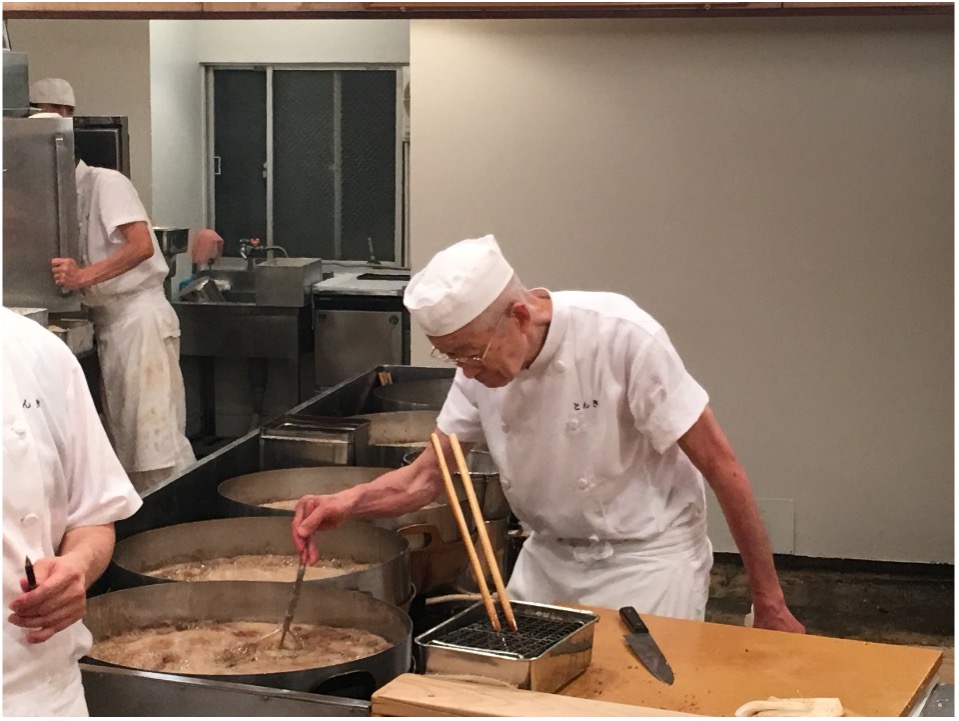
Tonkatsu: If you haven’t eaten it before this is a breaded pork cutlet that is similar to schnitzel. Definitely should try it while you are here. In Tokyo there are a couple of places you could try. There is a very good spot that I usually go to in the Roppongi Hills complex called Butagumi (maybe you could combine this with a walk around Roppongi at night). There is also a place called Tonki near Meguro Station that is good, cheaper, and fun to watch (it has been around for 70-80 years and features a lot of older Japanese men making the fresh katsu in front of you). It is not quite as good as Butagumi but still a great place for a family to eat. The final place is a Michelin starred katsu restaurant that I have not tried called Katsu Zen (in Ginza). We had katsu in Osaka as well and it was delicious. It was at the top of a skyscraper near Osaka Station but I can’t remember the name. If I remember it I will let you know
Soba – Soba and Udon shops are all over the place. They are a cheap and easy way to eat some good noodles quickly when you are going from one place to the next. I like places that have a machine in front where you put your money in and get a ticket for your choice (may be hard if you don’t read Japanese). There are some nicer places that are more for sit down meals but I think you have better choices than soba when you want to have a sit-down dinner. If you want a nicer place there is a Michelin starred Soba place called Kyourakutei in Shinjuku.
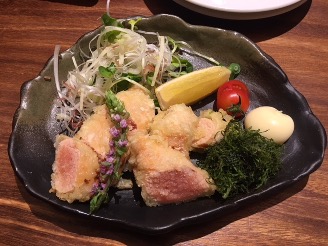
Yakitori – This is another one where you have a ton of options and there is always a solid yakitori place in pretty much every neighborhood. I think that the best place to have it is a place called Yakitori Hachibei (also in Roppongi Hills). We ate at the Fukuoka branch and it was very good. My favorite thing on the menu is, ironically, not yakitori, but mentaiko (cod roe sack) tempura.
It is an entire cod row sack that is battered and fried. If you are into that kind of thing it is really good. The only drawback for some people about this place is that they don’t have some of the non-mainstream options like liver or chicken hearts (one of my favorites). This is also a place where you can order horse meat sashimi from Kagoshima, which is where they raise them especially for their meat. I also have been meaning to try a place in Meguro (my old neighborhood) called Torishiki. It is down a narrow alley and is a very nice place to try yakitori. The dilemma for me is that my favorite fish and seafood izakaya is right next door. I always end up eating there instead but one day I am going to bite the bullet and have two meals in a row and eat at both places. One other place in Tokyo that is a Michelin-starred yakitori place is called Toriki. I believe Anthony Bourdain went there on his show and they cook every part of the bird, which is all served within a few hours of butchery.
Izakayas – These bar and grill-type places are the best way to try a lot of different smaller plates for not much money. Generally they are for adults, but nobody will mind if you bring kids (especially if you can find a bigger one with lots of tables). I can’t give you a specific name because they are often in out-of-the-way locations that are hard to describe. If you stay at a hotel I am sure they can recommend plenty of options. In any busy area like Shinjuku or Shibuya you will have tons of places to choose from. I like to head out to places like this after everyone has gone to bed and have some beers and smaller plates on my own or with anyone else that is up for going out.
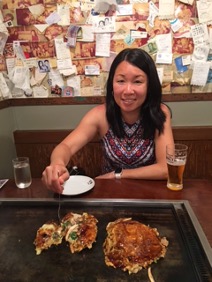
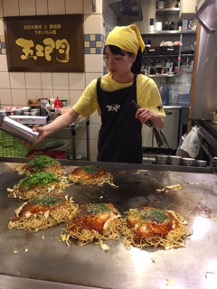
Okonomiyaki – This is a famous dish in Osaka (although Hiroshima has its own style that is also well-known). It is basically a savory pancake with pork or seafood inside. They have hot griddles that they cook on in front of you so it is part entertainment and part dinner. Usually it is not very expensive either. The famous chain in Osaka is called Kiji. I actually think there is better Okonomiyaki at many places so I would check various food blogs or websites to determine which one is best for you (or close to your hotel) when you are there. You can absolutely eat it in Tokyo as well if that is easier. It is just famous in Osaka. In Hiroshima it is also famous with the difference being that they put noodles in theirs (picture on right).
Mos Burger: I am in the fast food business, but this is fast food on a whole ‘nother level. They are everywhere in Japan and have a full menu starting at 7 AM (I usually eat regular, non-breakfast food there in the morning so that I don’t waste a lunch or dinner opportunity.) They have good burgers and fries, but the real stars of the show are any of their lightly fried sandwich options. There is a tonkatsu burger, a fried chicken burger, shrimp cutlet burger and a few other options. Everything is fresh and hot and made to order and this place is worth a visit or 4. In fact, I would recommend trying all kinds of fast food here (or anywhere you go in the world). It is a totally different experience.
Department store food halls: Every department store in Japan has 1-2 subterranean floors with all sorts of packaged and prepared foods to check out. These are usually filled with interesting options and often have free samples. You can also buy a lot of things by the piece or by weight so you can put together a huge variety of foods to sample. Mitsukoshi in Ginza (the one I wrote about earlier on Day 1) has a patio area up on the 9th floor so you could buy some things and take them up there. The restaurants are also usually good at department stores but they are found on the top floors, so you often can have a meal with a nice view. They generally have several types of restaurants to choose from.
Soft Drinks: Vending machines are everywhere in Japan and they sell anything you can imagine. I would spend the $1 per drink to try as many different bottled beverages as you can. I am seeing a lot more Japanese bottled drinks for sale in the US lately, but you should still try Calpis/Calpico, Pocari Sweat, Beard Papa (cream puff flavored drink), and even Apple Juice (or any other kind of juice. We also loved peach juice). I was drinking sweet, iced coffee long before Starbucks introduced the Frappuccino to the world. Also, Coke products that are familiar to you in the US taste better here imho. Not sure if they use slightly different ingredients but you should definitely give a lot of different types of drinks a try.
Things that aren’t even Japanese: Like I said earlier, non-Japanese food here is awesome. Whenever I visit I try to find a French bakery and have a croissant at least once. I stop at a convenience store nearly every afternoon to buy an egg salad sandwich (which I never eat in the US), and the pizzas and pastas at Italian restaurants are world class. Japanese style fried chicken (Karaage) is one of our kids’ favorite foods, and Chinese style dumplings and steamed buns are as good as pretty much anyplace in China. Cream puffs and soft serve ice cream are another popular option and found everywhere.
Things unique to Japan or specific regions of Japan: Every town, city, and prefecture of Japan has a signature food product or dish. The city where I lived in high school (Sendai) was famous for cow tongue, and a type of custard cake. When you are in Osaka, you should try Okonomiyaki (described above) and takoyaki (sort of like a fried ball of dough with a piece of octopus inside and usually covered with a sweet sauce or Japanese mayonnaise). In Hiroshima, you should try Hiroshima style okonomiyaki (made with noodles in it) and Anago (sea eel). You can order anago tempura which is really good, and if you go to Miyajima island they have a few places that sell steamed buns filled with sea eel. Tokyo is also known for Anago sushi and tempura so you can always eat it there. Tokyo is also somewhat known for chanko nabe, which is kind of a hotpot with lots of meat, vegetables, and mochi. It is known as the diet of sumo wrestlers that helps them gain weight. Finally, you could try Monja yaki. This is a little tougher to find but there is a cool old neighborhood that has a street lined with places that serve it. It is like okonomiyaki but a little different. The neighborhood isn’t that convenient but this area is one of the few that still has older buildings that weren’t bombed during WW2. So, most of the restaurants are in old school wooden buildings in a 100-year old neighborhood. In addition to regional specialties, Japan is one of the few places in the world where you can eat whale (there are lots of ways to eat it but it is worth buying higher quality sashimi if you are only going to eat it once), horse meat sashimi (mentioned above) and chicken sashimi (If you can wrap your brain around it, Japan is virtually the only place in the world where their food system and dedication to freshness make
In addition to regional specialties, Japan is one of the few places in the world where you can eat whale (there are lots of ways to eat it but it is worth buying higher quality sashimi if you are only going to eat it once), horse meat sashimi (mentioned above) and chicken sashimi (If you can wrap your brain around it, Japan is virtually the only place in the world where their food system and dedication to freshness make this possible). For whale, there is a place in Shibuya that specializes in it and probably have English menus (they seem to get a lot of tourists).
General Travel Tips:
Trains and Train Passes: Everyone visiting Japan gets a JR pass, which is definitely the way to go if you plan to visit more than one city. But, a lot of people don’t know that an 10 day trip to Japan can easily be done with only a one-week JR Pass. You can save the money by not paying for 2-week pass and just buy a one-way ticket from the airport into Tokyo, and buy a multiple day subway pass. You can buy them when you land at the airport and a 3-day pass works out to about $5 per day for unlimited rides. For kids 12 and under it is $2.50 per day. You can buy these at Haneda or Narita when you land. Here is a link with a description and maps of the airport counters where you can purchase: http://www.tokyometro.jp/en/ticket/travel/index.html
One note about Haneda Airport. Depending on where our hotel is we usually take a taxi. A train may save a little money but it usually involves a lot of changes, walking, and time when you have just gotten off a long flight. For an extra $20-40 a taxi is totally worth it. You should be able to take one to anyplace in the southern part of Tokyo. For Narita Airport you have no choice. It is too far to take anything other than the Narita Express (which is about $25 one-way). There are local trains that cost about $8-10 but they take a lot longer and involve changing trains. I used them when I was a cheap college student but not anymore. There are some buses that might be cheaper but Narita Express is a great way to experience Japanese rail for the first time.
You can take care of your JR Pass at the JR office at the airport, and tell them that you do not want to activate it until the day you leave Tokyo (just tell them the specific date, or you can activate it at a JR Office on the first day that you actually use it (you can also activate it at any JR office while in Tokyo. Just make sure to tell them the date that you want to start using it so it is not activated before you need it). If possible, try to include the day that you go back to the airport if you are flying out of Narita.
Getting around: Walking is my preferred mode of transportation wherever I go in the world, and this is especially true for Tokyo. I would take the opportunity to walk between stations rather than ride the train whenever it is possible. You take in all sorts of interesting things that are not in any guidebooks when you roam through neighborhoods as you go from place to place. For trains, Tokyo has two main systems: The subway system is the underground railway that is more extensive, and JR is for above ground trains and has fewer lines. That said, JR stations are the biggest and located near almost all of the important attractions you might want to visit. When you are going from one place to another, the subway system might require several stops and transfers while JR may be just two stops away. Even if you have the subway pass I would consider spending the $1.50 or so on a JR ticket to make things easy if a situation like this comes up (like going from Harajuku or Shibuya to Shinjuku). One very important thing that is sometimes hard for first-timers to figure out if they do not have a subway pass is that Tokyo actually has a few different companies that run different subway lines. If you have a pass this won’t matter because it works on all of them, but if you don’t you may have to buy separate tickets if you use two separate lines to get somewhere. Once you know the system you can figure out how to get places without riding the trains of different companies, but it can be confusing at first. With only a few days in Tokyo I wouldn’t worry about it. If the situation ever arises someone will help you get where you are going.
One thing that I think is really important when traveling around by train is to look at the maps of the area that are on the walls before you exit the station. There is usually a neighborhood map, and signs with exit numbers. Usually signs on the wall or map will tell you what is outside each exit. It should help you figure out in which direction you are heading and what lies outside each one, and will help you get oriented before you emerge from the station.
Language: Probably one of the most difficult things about getting around Japan is the language barrier. I think it is tougher here than anywhere else in the world. It’s not because people can’t speak English. They normally study it for 12 years. The accent in Japan has such specific sounds that it is very difficult to pronounce certain (many) English words, and very hard to understand them when spoken. The key is to really speak slowly and pronounce every syllable. Even at that it will be tough but try to make that part of the fun.
General Travel Advice: The #1 piece of advice that I used to give to anyone travelling internationally is to download the Mobile Passport app (if you don’t have Global Entry). This app will basically make you a Global Entry member for free. You take a picture of each family member’s passport, enter their info, and you can skip the entire line for passport control when you land at SFO (or most other airports in the US). You enter the details of your flight and answer the questions for customs while still on the plane, then it will give you a QR code. You show it to any TSA agent after you deplane and they will literally open up the cordoned off area and tell you to just walk right up to the front (there should also be a lot of signs directing people with the Mobile Passport app where they should go). You skip the entire line and there will be 2 dedicated agents for mobile pass users. I don’t think we have ever had more than 1 person in front of us in line, but more people may be using it these days. I used it when we came back from Africa and my brother (who was on the same flight) was still in the regular line at the airport after we had arrived at our house. If you don’t check bags you can plan on 10 minutes from the plane until you are in an Uber. However, we did have one time when there were some changes to immigration policy and they weren’t accepting mobile pass on the day we arrived. That was a huge bummer. Other than that it has always worked great (they don’t have it at Oakland FYI). If you have Global Entry then using Mobile Passport doesn’t make sense, but I do know that some people check the lines of both and then enter their info on Mobile Passport really quickly if they think it will be faster.
We always take all natural sleeping pills when we travel anywhere. It will not be hard to fall asleep at night when you visit Asia (you will actually be struggling to stay awake past dinner). They usually help to keep you asleep so you are not waking up at 2 or 3 in the morning on the first few days. We usually take Sleep and Restore for the adults (https://www.amazon.com/Natrol-BHBAZUSF0518A2579-Sleep-N-Restore/dp/B00170HJ9W/ref=sr_1_7_a_it?ie=UTF8&qid=1527210965&sr=8-7&keywords=sleep+and+restore). There are several different brands you can use for kids. We usually take them for 4 days and they seem to help a lot. The critical thing to remember is to just sit still and relax if you wake up in the middle of the night. You WILL fall back asleep but it might take a while. If you get up and start moving around, or start looking at your phone you may not be able to go back to sleep.
Our first objective when we check into a hotel or Airbnb is to find the closest market to buy water and snacks. The savings just on bottles of water alone are worth finding someplace that does not charge tourist prices. We buy a few large bottles and 3-5 small ones. Then, we leave the big ones at the hotel and we fill the small ones each day before we leave. During summertime in Japan it will be very hot and humid so having water will save you a lot of money vs. buying it on the spot at a tourist attraction.
Depending on what kind of phone plan you have, it might be expensive to use in other countries. We have Verizon which is $10 per day for most countries (I think most plans are around this much for most countries now). If you don’t want to use your phone plan then you can rent a wifi hotspot for about $5 per day. We used one the last time we were there and it was really helpful (especially the map programs on our phones). That said, one of the things we love about international travel is that we are disconnected and totally engaged with our kids all day long. We use our phones only when trying to find necessary info related to that day’s itinerary. Here is the company we used: https://japan-wireless.com/product They delivered our hotspot to our hotel so it was waiting for us when we arrived. They provided an envelope that we stuck it in and mailed it back the day that we left. Very easy but make sure you keep track of all of the parts/pieces.
Along those lines, we always dedicate one pocket of a bag or suitcase to electronics-related items. We keep chargers, a selfie stick, 2 battery packs for recharging (if you take a lot of pictures or videos on your phones you might need one in the middle of a day out), wall adapters (2-3, but you won’t need them in Japan), and a USB splitter for a wall plug. We use this to charge 4 different USB devices at once overnight. Very helpful.
Speaking of map programs, you should use the google maps app on your phone to download a map of any country you visit. You can then use it offline. It is perfect for getting around. The only drawbacks are if you are driving somewhere and need to worry about traffic. The map is offline so it won’t know if there is an accident or traffic jam. It will just send you on what would normally be the fastest route. Also, the data/info is more limited than the online version, so restaurants will all show up, and their star rating, but none of the reviews that you would normally find on Google maps. Not a huge deal when you are touring around.
When you go out for the day, I would recommend having an extremely light weight backpack to carry water, a guide book, maybe a selfie stick, and battery packs for your phone (and snacks. But again, Japan has great food everywhere that is reasonably priced).
I throw a lot of information at people and I often don’t understand that not being able to read or speak Japanese may cause a lot of problems or delays. I think that the itinerary I laid out allows enough time for this and is not too ambitious. One thing I have a hard time understanding is how extensively (or not) people will research places that they plan to visit. I usually send them a ton of info (like right now), but they wait until they arrive to pull it out to try to figure out how to get around. It is extremely important to check out (far in advance) maps of the cities you will visit. Get a general idea of how the city is laid out, where important sights are located, and what train lines/roads you will take to get there. I go so far as to use Google Street to get an idea of what I am looking for, and even create maps of places I want to see (I do this more for restaurants). If you do this It will probably save you a lot of time.
Things I haven’t mentioned:
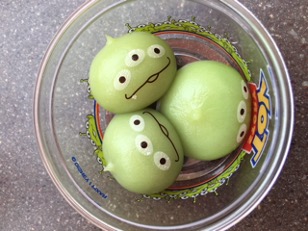
Tokyo Disneyland: Probably the nicest Disneyland in the world. They also have Disney Sea which is super cool. But, if you don’t have at least 2 full weeks in Japan it is not unique enough to be worth your time (despite the dumplings that look like the heads of the aliens from Toy Story). There are more Japanese things to see. If you do have the time and decide to go, there is a couple that has created a blog with an insane amount of info on Tokyo Disneyland (and pretty much every other Disney theme park) that I found very helpful. They will give you far better advice than I ever could: http://www.disneytouristblog.com/tokyo-disney-trip-planning-guide/. Pay especially close attention to their instructions about utilizing the Disney App to track ride times, and using Fast Pass to get the most out of your days there. One day in each park was a great plenty for us and we were able to ride pretty much everything (on a Sunday in June). This was mainly because we had planned ahead.
Big Site (Odaiba) – This is a cool spot for families to spend a day with shopping and some museums. They have a lot for kids so I definitely would not say that you can totally skip this. I just think that it is like a lot of big family friendly attractions around the world and not totally uniquely Japanese. We have been to a bunch of kids museums around the world and, while great, they are usually a lot like the Exploratorium so not that different from something you can see back home. That said, if you want a day where you are not running around to different attractions this might be a nice break. This would probably be my recommendation if you have a 5th or 6th day in Tokyo and don’t want to go to Tokyo Disneyland.
“Hidden” Tokyo, Osaka, etc: Everyone wants a unique experience or to find something that is really out of the way or specific to their personal hobbies or interests. Unique experiences are very hard to find now that the internet exists (early morning sumo practice and Tsukiji fish market used to be on the list) so I can’t say that you will be able to do anything that is totally different. I usually spend time in Northern Japan when we go there since that is where I used to live. That provides a lot of experiences that most people don’t have, but it is pretty far from the main tourist paths. Also, if you have any specific interests and would like to see things related to them there are plenty of blogs about unique, out-of-the-way, and downright weird Japan (there is plenty of that to be found). Feel free to get in touch if you have something specific you would like to see and I will try to give you some advice.
Lodging: We use hotel points whenever we travel so our lodging is usually a done deal wherever we go. That said, hotel rooms in Japan usually cannot accommodate a family of 4. Airbnb might be an option for larger families. There are plenty of budget friendly hotels in Osaka and Tokyo. They are basic but totally fine. Normally they are used by business travelers but they have quite a few in Shinjuku and usually have rooms with 2 single beds for less than $100. If I am not using points I usually look for an APA Hotel. They have very small rooms, but are usually $60-100 and totally fine. They also often have laundry machines if you are on a longer trip. The one I stayed at last time (in Ochanomizu in Tokyo) had very nice laundry facilities on the ground floor if you need that. If you want a nicer hotel experience there are plenty of higher-end places, but these are very clean and a cheap way to stay in the middle of major cities. In general, I think hotels (and food) in Japan are far cheaper than any other modern country in the world.
For neighborhoods, if you don’t belong to a specific hotel loyalty program and are flexible on where you stay, I would consider someplace on the Yamanote line (all things being equal). I think that proximity to a train or subway station should be your #1 consideration when staying in Japan (especially in summer) as a 15-20 minute walk back to the hotel can be a real bummer at the end of a long day. I think the best values for Tokyo are found in Shinjuku and Shinagawa (but Shinjuku is definitely a more interesting neighborhood). You can also find a lot on the east side of town, but I think that some (not all) of those areas can be pretty boring places to stay. Shibuya is also exciting and usually just a little more expensive than the other areas. One thing about Shinjuku is that it does have a street or two that are a little seedier (which will seem pretty tame compared to here). For Osaka, I think that they have a lot of cool areas but the best combination of excitement and convenience is Osaka Station.
Onsens and Ryokans: If you have the time I would try to spend a night at a ryokan or onsen. An onsen is a hot spring spa that often has a hotel where you can stay. We usually relax there and have dinner, spend time in the hot spring, sing karaoke, etc. They usually are located in beautiful natural settings so a nice way to experience Japanese nature (just make sure you read up on proper etiquette before you go to one). Ryokans are traditional Japanese inns that are usually pretty expensive, but often include amazing meals. Both are cool experiences that would make a Japanese trip memorable. The further you get from Tokyo and Osaka (or places in between) the more likely you are to have a uniquely Japanese experience. We always go to an area between Sendai and Yamadera that is out of the way for most itineraries, and I am definitely the only white guy for miles around. If you have time to take a one night trip from Tokyo you could try to book a place in Hakone or on the Izu Peninsula.
That is all I can think of for now. Again, feel free to contact me anytime. I love sharing tips with people so am happy to help!




 Travels with Justin